Kitchen Exhaust Cleaning in Sarnia
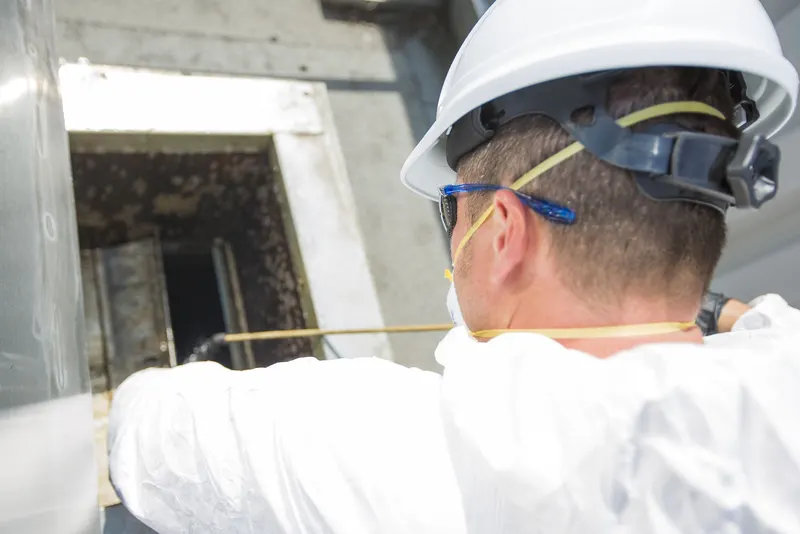
Kitchen Exhaust Cleaning is the cleaning of the grease duct that carries cooking vapour from the top of your hood to the fan on the roof: the horizontal run above the ceiling, the riser through the building, and the access panels that open each section. Sarnia Hood Cleaning opens every panel, scrapes each reachable section to bare metal, checks it against the NFPA 96 grease limit of 0.078 inches, and names each section on a signed certificate. In a London Road plaza or a downtown Front Street building where kitchens share one riser, your quote shows which part is yours.
Commercial kitchen exhaust cleaning in Sarnia: horizontal run, riser and access panels
The horizontal run leaves the top of the hood and crosses above your ceiling tiles toward a shaft or an outside wall. Grease drops out onto the bottom of the duct in the first few feet and packs into the outside curve of every bend.
The riser is the vertical section that climbs to the roof. Vapour cools on its walls, turns back to liquid and runs down to the bend at the bottom. A riser checked only from the roof can look fine while its base holds a pool of grease.
Access panels are sealed, removable doors in the duct wall. Each one lets a technician reach a section with a scraper. Where there is no panel, nobody has cleaned that section, and the walk-through marks the spot. The canopy itself is covered on the hood cleaning services page, and the fan on the exhaust fan repair page.
Hood-only vs full-system kitchen exhaust cleaning in Sarnia
A fire prevention officer from Sarnia Fire Rescue Services can tell the two records apart at a glance.
| Part of the system | Hood-only vs full-system: hood-only | Full-system |
|---|---|---|
| Duct opening above the hood | Cleaned as far as an arm can reach. | Scraped through the first panel and checked against the limit. |
| Horizontal run and bends | Not opened and not on the certificate. | Every panel opened, every bend scraped and photographed. |
| Bottom of the riser | Not reached. | Pooled grease scraped out and checked. |
| Fan inlet on the roof | Not reached. | Cleaned from the roof and checked. |
| What the certificate says | Names the hood. | Names each section cleaned, and each section that could not be reached with the reason why. |
What the certificate asserts, and what it does not, is explained in the NFPA 96 guide.
Hood vent cleaning: the opening where the hood meets the duct
Hood vent cleaning is the cleaning of the duct opening above the plenum, where the hood hands its grease to the rest of the system.
The "hood vent" is the opening in the top of the hood that leads into the duct. Hot vapour meets a cooler surface there first, so grease builds fast. A hood-only visit wipes the lip. Only a full-system visit follows it past the ceiling.
Commercial kitchen hood vent cleaning opens the first panel above the hood and works down to the vent, so the vent and the first bend are cleaned and photographed as one section.
Kitchen hood filter cleaning and replacement in Sarnia
Kitchen hood filter cleaning happens on every visit. Replacement happens only when a filter fails inspection, through a soak-and-swap exchange.
When to clean. A baffle filter with straight blades and a sound frame goes into a hot soak, comes out clean and goes back in the slot.
When to replace. Three faults take a filter out of service. A bent blade stops turning the air, so grease passes straight into the duct. A corroded frame lets blades drop out of line. A filter cut for a different hood leaves a gap at one end of the slot.
The soak-and-swap exchange. A clean, matched set goes into your slot, and the loaded set leaves with the crew for cleaning, so your line keeps running. A filter that fails inspection is replaced with a new one of the right size, listed on your quote and noted on the certificate.
Best kitchen exhaust cleaning services in Sarnia for a plaza or a shared downtown building
In a building where several kitchens feed one riser, each tenant owns its branch and the building owns the shared section.
Plazas along London Road and Exmouth Street often have two or three food units venting into one shaft. Older mixed-use buildings on Front Street can stack a restaurant and a cafe on the same riser. The riser above the junction collects grease from every kitchen and belongs to no single tenant.
The split gets written down before the crew arrives. Each unit owns its hood and branch duct up to the junction. The riser and the fan belong to the building. Your certificate states where your branch ends, and the riser quote goes to the property manager with proof of WSIB coverage and liability insurance.
Checking the 0.078 inch limit along the whole path
NFPA 96 sets the acceptable grease depth at 0.078 inches, in the duct as much as the hood. A full-system visit checks it at four places: the vent above the hood, each bend, the bottom of the riser and the fan inlet.
A section with no panel gets no reading and is never listed as cleaned. The certificate lists it as not accessible and names the panel that would open it.
Creosote from smokers and wood-fired ovens in Lambton County kitchens
Wood smoke adds creosote to the grease in a duct. This tar condenses on cooler surfaces, hardens into a glaze and locks grease into it. Ordinary degreaser does not remove it, so a creosote-lined duct is cleaned by hand scraping.
A smoker or a wood-fired oven falls under the monthly interval NFPA 96 publishes for solid-fuel cooking. Solid-fuel duct work is quoted per job after inspection.
Where to find kitchen exhaust cleaning services near me in Sarnia
Sarnia Hood Cleaning traces duct runs across Sarnia, Point Edward, St. Clair Township, Petrolia, Plympton-Wyoming and Lambton Shores.
Long runs with few panels belong to the older downtown buildings by Sarnia Bay. Plant cafeterias along the St. Clair River industrial corridor often run long ducts, and work there follows the site permit process. Town-by-town detail is on the areas served page.
How much does kitchen exhaust cleaning cost in Sarnia in 2026?
Kitchen exhaust cleaning in Sarnia costs from $585 per visit for a single-hood kitchen up to ten feet and from $995 per visit for a multi-hood kitchen of two to four canopies. Larger and shared-riser systems are quoted on site after a free walk-through, with the written quote back within 24 hours.
On a full-system job, run length, bends, riser height and existing panels move the price. Any new panel is its own line on the quote.
Next step: call 226-799-4732 or request a written quote. Tell us whether your unit shares a building with another kitchen and whether anyone has opened a duct panel before. The other services are on the services page.
Kitchen exhaust cleaning in Sarnia: frequently asked questions
Who pays to clean a shared riser in a Sarnia plaza?
The building owner pays under most leases, because the riser and fan serve every tenant. Each tenant pays for its own hood and branch duct. Read your lease to confirm, and expect two separate quotes.
How many access panels does a kitchen exhaust duct need?
A kitchen exhaust duct needs a panel wherever a technician has to reach in with a scraper: near the hood, at each bend and at the bottom of the riser.
What happens to duct sections nobody can reach?
Unreached sections go on the certificate as not accessible, with the reason and the panel that would open them. No section is listed as cleaned based on a look through the hood vent.
When does a hood filter get replaced instead of cleaned?
A hood filter gets replaced when a blade is bent, the frame is corroded or the filter is the wrong size for the slot. The new filter goes in through the soak-and-swap exchange and is listed on your quote first.
Does the 0.078 inch limit apply inside the duct?
The 0.078 inch limit applies along the whole path, from the hood vent through the duct and riser to the fan inlet. The standard is explained in the NFPA 96 guide.