NFPA 96 for Sarnia Kitchens: Intervals, Fire Code and Certificates
NFPA 96 Standard for Ventilation Control and Fire Protection of Commercial Cooking Operations is the document that sets how a commercial kitchen exhaust system is inspected and cleaned. It sets 0.078 inches as the acceptable grease depth, and it publishes inspection intervals by type and volume of cooking, from monthly for solid fuel to annual for a church kitchen. In Sarnia and across Lambton County, it reaches your kitchen through the Ontario Fire Code, which references NFPA 96. This guide references the published NFPA 96 standard. Sarnia Hood Cleaning is not affiliated with NFPA.
Last updated: September 2026
NFPA 96 in plain terms: a measurement, a schedule and a record
NFPA 96 is a technical standard written by the National Fire Protection Association. On its own it binds no one in Ontario. It carries weight here because the Ontario Fire Code references it. For a kitchen operator, the cleaning side comes down to three parts.
A measurement. Grease inside the exhaust path is fuel sitting above a flame. The standard puts a number on it: once deposit reaches 0.078 inches, about two millimetres, the surface needs cleaning.
A schedule. The standard tells you how often to inspect the system, based on what you cook and how much. Cleaning follows whenever the inspection finds grease at the limit.
A record. Each inspection and cleaning is written down with the date, the parts covered and who did the work, and kept where a fire inspector can read it.
NFPA 96 cleaning frequency: cooking volume vs inspection interval
NFPA 96 cleaning frequency follows what you cook and how much of it, not the size of the room. The standard publishes four inspection intervals.
| Interval | Cooking volume vs inspection interval in NFPA 96 | A Lambton County example |
|---|---|---|
| Monthly | Solid-fuel cooking | A wood-fired pizza oven, a smoker, or a charcoal grill under a hood. |
| Quarterly | High-volume cooking: charbroiling, wok cooking, 24-hour operation | A charbroiler line, a wok station, or a grill that runs all night. |
| Semi-annual | Moderate-volume cooking | A two-shift pub in Corunna or a care home kitchen serving three meals a day. |
| Annual | Low-volume cooking: churches, seasonal businesses, day camps | A church hall kitchen, a seasonal snack bar, or a day camp kitchen. |
Source: the published NFPA 96 standard. The interval is the longest you should wait. A kitchen that loads faster needs cleaning sooner.
What are grease-laden vapours?
Grease-laden vapours are the hot mix of vaporised fat, oil, water and smoke that rises off cooking equipment and turns back into liquid grease on every cooler surface it meets.
This phrase decides whether NFPA 96 applies to you. The standard covers cooking equipment that produces grease-laden vapours. A fryer, a flat-top or a charbroiler brings a kitchen inside it. A steam table on its own does not. As the vapour cools on its way through filters, plenum, duct and fan, it leaves a film at each step, and that film is what the 0.078 inch measurement reads.
How the Ontario Fire Code puts NFPA 96 into force
The Ontario Fire Code is the provincial fire safety regulation for existing buildings, and it references NFPA 96 for commercial cooking exhaust systems.
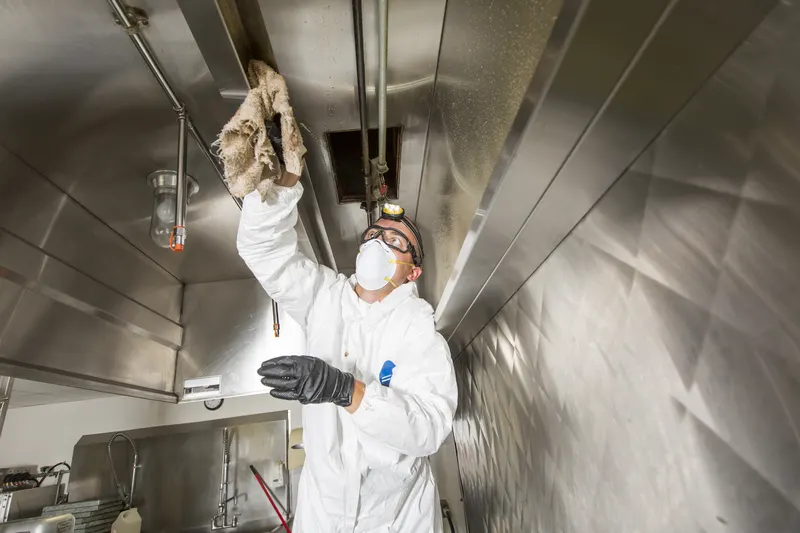
Think of the two documents as a pair. The Fire Code is the law. NFPA 96 supplies the technical detail the law points to: what to inspect, how often, to what depth, and what to record. Neither document licenses hood cleaning contractors, and neither issues a certificate to a company.
NFPA 96 hood cleaning and Sarnia Fire Rescue Services inspection orders
Sarnia Fire Rescue Services runs five stations covering the city's 168 square kilometres, and its fire prevention officers inspect commercial and institutional buildings under the Ontario Fire Code.
When an officer finds a property out of compliance, the department issues an inspection order. It no longer gives a verbal or written warning first. For a restaurant, that means an overdue exhaust cleaning or a missing record can go straight to an order on the first visit.
Outside the city, the fire department depends on where you cook. Point Edward Fire and Rescue is a volunteer department serving the Village of Point Edward. St. Clair Township Fire Department formed in 2001 when the Moore and Sombra township departments merged, and it covers Corunna, Mooretown and Courtright. Petrolia, Plympton-Wyoming and Lambton Shores each run their own municipal fire department. The full list by town is on the areas served page.
Wherever you are, keep three things ready: the latest cleaning certificate, the before-and-after photographs, and clear access to the filters, duct panels and rooftop fan.
NFPA 96 certification: what exists and what to look for in a hood cleaning company
NFPA 96 certification for a hood cleaning company does not exist. NFPA writes and publishes standards. It does not certify contractors, inspect kitchens or endorse companies.
People across Ontario search for a "certified hood cleaning company" and "NFPA 96 certified technicians". No body issues either credential. NFPA does not, the Ontario Fire Code does not license hood cleaners, and Sarnia Fire Rescue Services does not endorse them. What you can ask for is proof: a signed health and safety certificate referencing the published NFPA 96 standard, before-and-after photographs of every cleaned surface, and proof of WSIB coverage and liability insurance before work starts.
What the certificate asserts. It names the parts of your system that were cleaned, the date, and the contractor, and it states that the work references the published NFPA 96 standard and that the contractor is not affiliated with NFPA.
What it does not assert. It is not a fire inspection. It covers only the parts it names, so a certificate that lists the hood alone says nothing about the duct or fan. It also makes no one certified, because it records work rather than granting a credential. Each part's scope is on the hood cleaning services, kitchen exhaust cleaning and exhaust fan repair pages.
Who is responsible for NFPA 96 compliance, the tenant or the landlord?
The lease decides who is responsible for NFPA 96 compliance, and in most restaurant leases the tenant who runs the kitchen books and pays for exhaust cleaning.
An inspection order lands on the property, so a landlord has a stake even when the lease hands the kitchen to the tenant. In a plaza on London Road, a shared building downtown, or a franchise unit where head office sets the schedule, the party that cooks should hold the certificate on site. Paperwork needs by kitchen type are on the who we serve page.
Where to find NFPA 96 hood cleaning near me in Sarnia
Sarnia Hood Cleaning checks kitchens against the published standard across Sarnia, Point Edward, St. Clair Township, Petrolia, Enniskillen, Oil Springs, Plympton-Wyoming and Lambton Shores.
A single-hood kitchen up to ten feet is cleaned from $585 per visit. Every other service is on the services page, and the cooking line around the hood is covered on the commercial kitchen cleaning page.
Next step: call 226-799-4732 or request a written quote. Have your last certificate in hand if you have one.
NFPA 96 in Sarnia: frequently asked questions
Is NFPA 96 the law in Ontario?
NFPA 96 is a standard, and the Ontario Fire Code is the law. The Fire Code references NFPA 96 for commercial cooking exhaust, so the regulation carries the duty and the standard carries the detail.
Can a hood cleaning company be NFPA 96 certified?
No hood cleaning company can be NFPA 96 certified, because NFPA does not certify contractors. Ask instead for a signed certificate referencing the standard, before-and-after photographs and proof of WSIB coverage and liability insurance.
Does NFPA 96 apply to a church or seasonal kitchen?
NFPA 96 applies to any commercial cooking that produces grease-laden vapours, however often it runs. Churches, day camps and seasonal businesses fall under the annual interval, which is the longest one, not an exemption.
Will Sarnia Fire Rescue Services warn me before issuing an order?
Sarnia Fire Rescue Services no longer gives a verbal or written warning first. Its fire prevention officers issue an inspection order when they find a property out of compliance.
Does Lambton Public Health inspect the exhaust system?
Lambton Public Health inspects restaurants and other food premises for food safety. The exhaust system falls under the Ontario Fire Code, which the local fire department enforces.